222222222222222222.png)
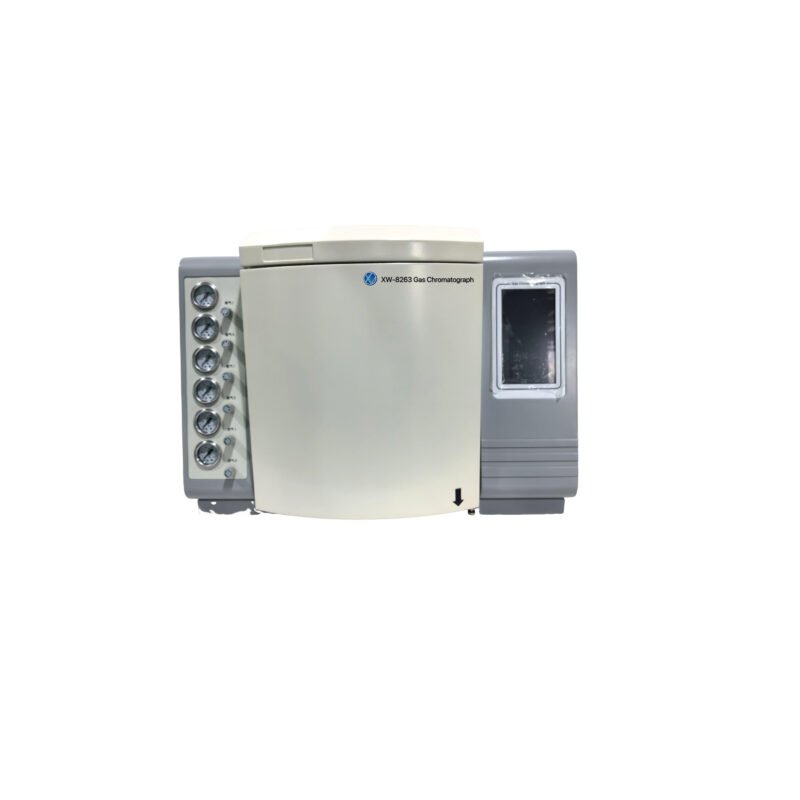
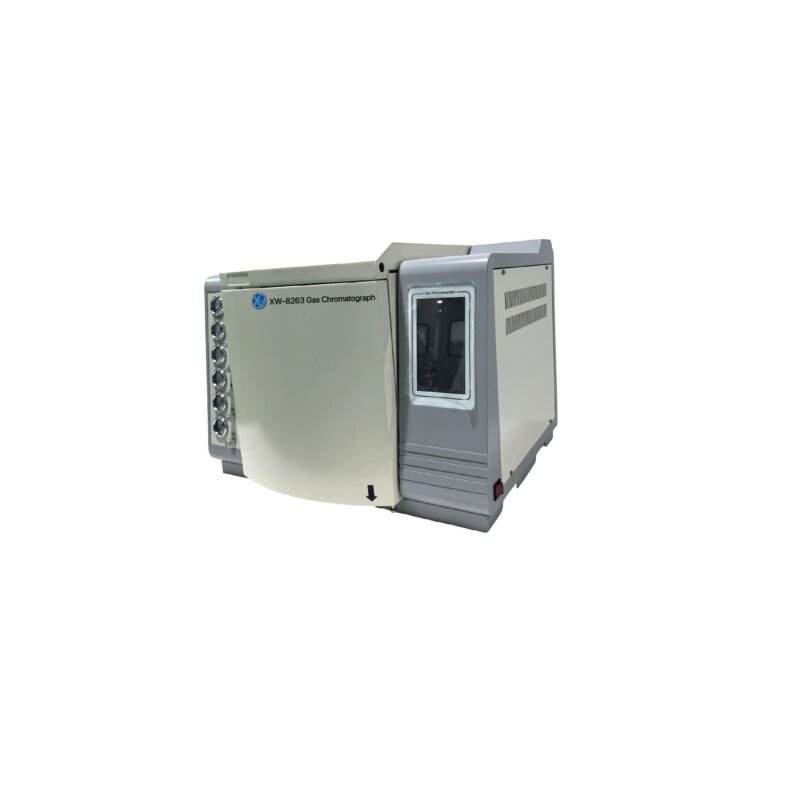
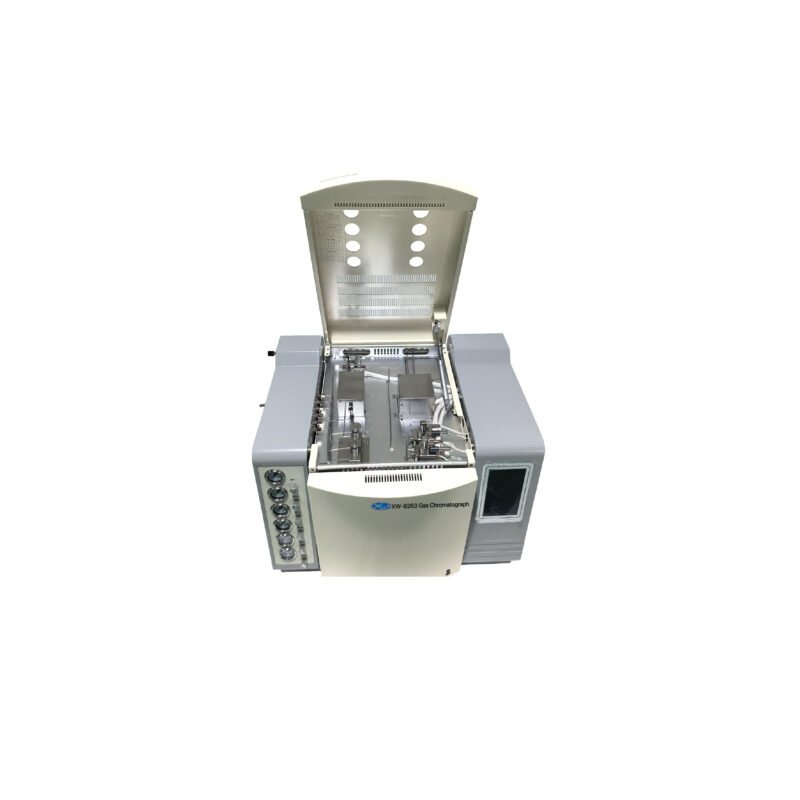
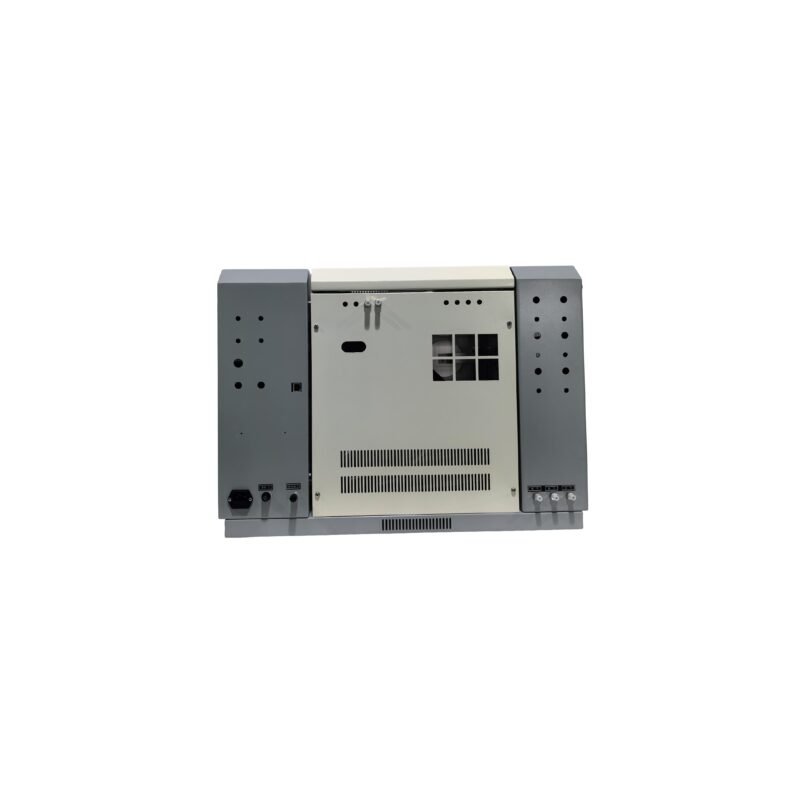
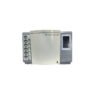
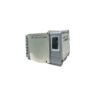
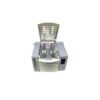
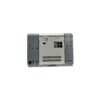
XW-8263 Gas Chromatograph / Transformer Oil Dissolved Gas Analyzer / Transformer Oil Gas Chromatography
About the product
Gas chromatography is a technique for the separation and analysis of multi-component mixtures. It mainly uses the boiling point, polarity and adsorption coefficient of each component of the sample in the chromatographic column differences, so that each component is separated in the chromatographic column, and the separation of each component for qualitative and quantitative analysis.
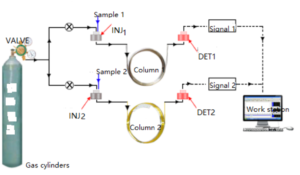
The gas chromatograph takes the gas as the mobile phase (carrier gas). When the sample is sent into the sampler and vaporized, it is carried into the packed column or capillary column by the carrier gas. Due to the differences in the boiling point, polarity, and adsorption coefficient of each component in the sample, the components are separated in the column. Finally, it is sent to the chromatographic workstation through the network, and the chromatographic workstation records and analyzes the gas chromatogram of each component, so as to obtain the analysis report of each component.
The schematic diagram of its working principle is shown below:
The method has been widely used in the petrochemical industry, biochemistry, medicine, health quarantine, food inspection, environmental protection, food industry, and medical and clinical departments because of its characteristics of high separation efficiency, fast analysis speed, and small sample consumption. In these fields, gas chromatography has solved the problems of quality inspection of industrial intermediates and industrial products, scientific research, public hazard detection, and production control.
Main technical indicators:
- Operation display: 8-inch HD color LCD touch screen, can be used as a handheld controller;
- Temperature control area: 8 ways;
- Temperature control range: room temperature above 4℃ ~ 450℃, increment: 1℃, accuracy: ±0.1℃;
- Program heating order: 16 orders (extensible);
- Lifting rate: 0.1 ~ 60℃/min;
- Gas path control: precision mechanical valve flow control;
- External events: 8 ways;Auxiliary control output 2;
Types of sampler: filling column, capillary, six-way valve, automatic sampler;
- Number of detectors: 3 (maximum); FID, TCD, ECD, FPD and NPD optional;
- Start sampling: manual, automatic optional;
- Communication interface: Ethernet: IEEE802.3;
Technical Specifications of detectors
- Hydrogen flame ionization detector (FID)
- Detection limit: ≤5×10-12g/s(cetane/isoctane)
- Baseline noise: ≤0.05PA
- Baseline drift: ≤0.2PA/30min
- Linear range: ≥106
- Thermal conductivity detector (TCD)
- Sensitivity: S≥10000mV•ml/mg(benzene/toluene) (with 1, 2, 3, 4 times magnification optional)
- Baseline noise: ≤20μV
- Baseline drift: ≤30μV/30min
- Linear range: ≥104
- Electron Capture Detector (ECD)
- Detection limit: ≤1×10-13g/ml (propyl hexa-hexa-isoctane solution)
- Baseline noise: ≤0.03mV
- Baseline drift: ≤0.2mV/30min
- Linear range: 103
- Radioactive source: 63Ni
- Flame Photometric Detector (FPD)
- Detection limit: (S)≤5×10-11G/s,
(P) 1 x 10 or less-12G/s.(Methyl parathion – anhydrous ethanol solution)
- Baseline noise: ≤3×10–13A
- Baseline drift: ≤2×10–12A/30min
- Linear range: ≥10 for sulfur2And P ≥103
- Nitrogen and Phosphorus Detector (NPD)
- Detection limit: (N)≤5×10-13G/s,
(P) 5 x 10 or less-13G/s.(Methyl parathion – anhydrous ethanol solution)
- Baseline noise: ≤5×10–13A
- Baseline drift: ≤2×10–12A/30min
- Linear range: ≥10 for nitrogen2And P ≥102